
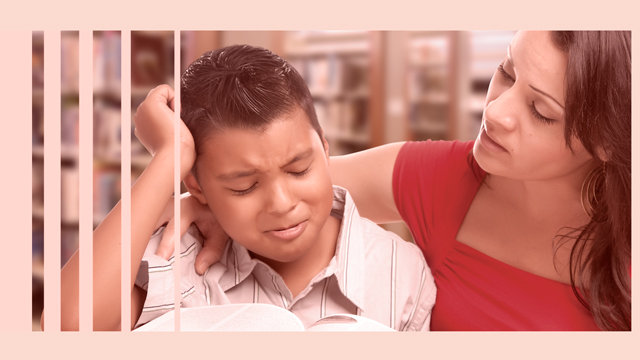
Why It’s So Hard to Watch Your Child Fail
As a child-centered play therapist, I often sit with parents who are struggling with something that feels almost impossible: watching their child struggle.
Whether it’s a poor grade, a conflict with a friend, a missed goal in sports, a forgotten responsibility, or a difficult social situation, many parents find themselves wanting to jump in and make things better.
When we love our children deeply, we naturally want to protect them from pain. Yet one of the greatest paradoxes of parenting is this: the experiences we most want to protect our children from are often the experiences that help them grow.
When Your Child Hurts, You Hurt
Parents are biologically wired to respond to their children’s distress. When your child experiences disappointment, embarrassment, or frustration, your nervous system reacts too.
The challenge is that children cannot develop confidence without opportunities to face challenges themselves.
The Child-Centered Play Therapy Perspective
One of the foundational beliefs of Child-Centered Play Therapy (CCPT) is that children possess an innate capacity for growth, resilience, and self-direction.
In play therapy, we do not rush to solve problems for children. Instead, we create a relationship built on acceptance, empathy, and trust. We believe children grow when they are given space to experience feelings, make choices, solve problems, and discover their strengths.
The same principle applies to parenting. When we immediately rescue children from every disappointment, we may unintentionally communicate, “I don’t think you can handle this.” When we remain present and confident in their ability to navigate challenges, we communicate, “This is hard, and I believe you can get through it.”
Failure Is Not the Opposite of Success
Many parents worry that failure will damage their child’s self-esteem. In reality, self-esteem develops when children learn they can survive difficult experiences.
Children build confidence when they discover:
• I can solve problems.
• I can recover from mistakes.
• I can tolerate disappointment.
• I can keep trying when things are hard.
• I am capable.
Confidence is not built through constant success. Confidence is built through overcoming obstacles.
Why Parents Step In Too Quickly
Sometimes our desire to rescue children is less about their discomfort and more about our own anxiety. Watching a child struggle can activate fears about failure, rejection, or emotional pain.
From a Child-Centered Play Therapy perspective, growth occurs when children are given opportunities to make choices, experience consequences, and learn from their experiences within the safety of a supportive relationship.
The Difference Between Rescuing and Supporting
Supporting a child means remaining emotionally present while encouraging them to navigate challenges.
Support sounds like:
• “That was really disappointing.”
• “I can see you’re upset.”
• “What do you think you want to do next?”
• “I’m here with you.”
Rescuing often involves removing discomfort, solving problems immediately, or preventing natural consequences.
Children do not need parents who remove every obstacle. They need parents who remain emotionally available while they learn to navigate obstacles themselves.
The Power of Acceptance
A core principle of Child-Centered Play Therapy is unconditional acceptance.
Children thrive when they know they are valued not because they succeed, perform, or achieve, but because they are worthy of love exactly as they are.
When a child fails, they often need acceptance before advice. Acceptance creates the emotional safety children need to take risks, learn from mistakes, and continue growing.
Trusting the Process of Growth
Children are constantly developing emotionally, socially, and cognitively. Growth rarely occurs in a straight line.
There will be forgotten assignments, friendship mistakes, emotional meltdowns, disappointments, and setbacks. These moments are not signs that your child is failing. They are signs that your child is learning.
When we step back just enough, remain emotionally present, and trust our child’s capacity for growth, we communicate a powerful message: “I believe in you.”
How Child-Centered Play Therapy Helps
Children who struggle with anxiety, perfectionism, low self-esteem, emotional regulation, frustration tolerance, or fear of failure often benefit from Child-Centered Play Therapy.
Through the therapeutic relationship, children develop greater self-confidence, emotional awareness, problem-solving abilities, and resilience. Parents learn how to strengthen connection while encouraging healthy independence.
When children are given both acceptance and opportunity, they develop the confidence to face life’s challenges and the resilience to keep moving forward when things don’t go as planned.
Frequently Asked Questions About Failure, Resilience, and Child-Centered Play Therapy
Is it okay to let my child fail?
Yes, in age-appropriate and safe situations, allowing children to experience failure can be an important part of healthy development. Children learn problem-solving, perseverance, emotional regulation, and resilience by working through challenges. While it is natural to want to protect children from disappointment, growth often occurs when they have the opportunity to learn from mistakes while knowing they have a supportive adult beside them.
Won’t failure hurt my child’s self-esteem?
Not necessarily. Research and clinical experience suggest that genuine self-esteem develops when children experience challenges and discover that they can overcome them. Children build confidence by learning, “I can handle hard things,” not by avoiding difficult experiences altogether.
How can I support my child without rescuing them?
Start by focusing on connection before solutions. Listen to your child’s feelings, reflect their emotions, and communicate confidence in their ability to work through the problem. Instead of immediately fixing the situation, try asking questions such as:
- “What do you think you want to do next?”
- “What have you tried already?”
- “How can I support you?”
This approach helps children develop independence while still feeling emotionally supported.
What if my child gets very upset when they fail?
Strong emotions are a normal part of learning and growth. Children often need help managing disappointment before they can problem-solve effectively. Allowing your child to feel sad, frustrated, embarrassed, or disappointed while providing empathy and acceptance teaches them that emotions are manageable and temporary.
How do I know when to step in and when to step back?
A helpful question to ask yourself is: “Is this a problem my child is capable of handling with support?”
If the situation involves safety concerns, significant emotional distress, or a challenge beyond your child’s developmental abilities, intervention may be necessary. If the challenge is age-appropriate, stepping back can provide valuable opportunities for learning and growth.
What is Child-Centered Play Therapy?
Child-Centered Play Therapy (CCPT) is an evidence-based approach that uses play as a child’s natural language for communication and emotional expression. Rather than directing the child’s play, the therapist creates a safe, accepting environment where the child can explore feelings, solve problems, build confidence, and develop healthier ways of relating to themselves and others.
How does Child-Centered Play Therapy help children who fear failure?
Children who struggle with perfectionism, anxiety, low self-esteem, or fear of making mistakes often benefit from Child-Centered Play Therapy. Through the therapeutic relationship, children develop:
- Greater self-confidence
- Improved emotional regulation
- Increased frustration tolerance
- Stronger problem-solving skills
- Healthier coping strategies
- A more positive self-concept
Over time, children learn to trust their abilities and become more willing to take healthy risks and face challenges.
How do I know if my child might benefit from play therapy?
Your child may benefit from Child-Centered Play Therapy if they:
- Become extremely upset by mistakes
- Avoid new experiences due to fear of failure
- Show signs of anxiety or perfectionism
- Struggle with self-confidence
- Have difficulty regulating emotions
- Frequently seek reassurance
- Experience challenges with peer relationships
- Have trouble coping with disappointment
Early support can help children develop the emotional skills they need to navigate challenges successfully.
Does play therapy involve parents?
Yes. Parents play an essential role in a child’s growth and healing. While the therapist works directly with the child, regular parent consultations help caregivers understand their child’s emotional needs, strengthen the parent-child relationship, and learn strategies that support healthy emotional development at home.
Ready for Support?
If your child struggles with anxiety, perfectionism, low self-esteem, emotional regulation, frustration tolerance, or fear of failure, Child-Centered Play Therapy can help. At Collective Hope Counseling, we help children develop confidence, resilience, and emotional well-being while strengthening family relationships.
Contact Collective Hope Counseling today at 832-521-8809 to learn more about Child-Centered Play Therapy and whether it may be a good fit for your child.