
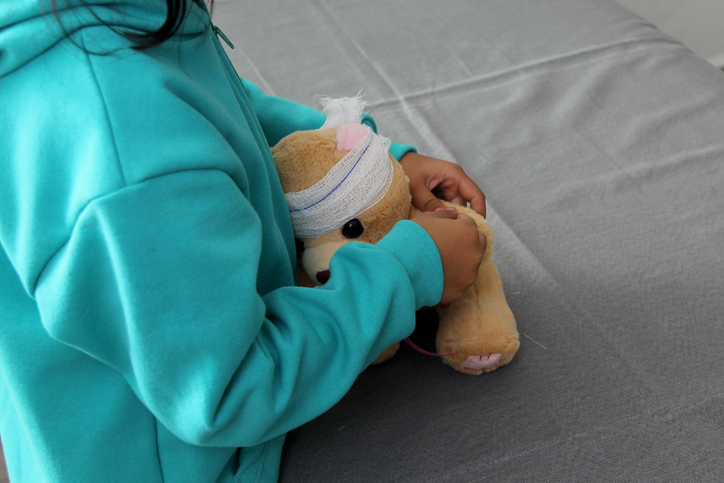
Medical care is meant to help, but for many children, it brings moments that feel scary, unpredictable, and overwhelming. Shots, IV placements, emergency room visits, long hospital stays, or chronic illness routines can shape how a child views their body, their safety, and the adults meant to protect them. These experiences, whether seemingly small or significant, can accumulate and impact a child’s emotional world long after the procedure is over.
As parents, you might notice changes without immediately connecting them to medical trauma. Children often show us how they feel long before they can explain it.
This article explains common ways children react to medical trauma and how play therapy offers a developmentally appropriate way for children to process their experiences.
What is Medical Trauma?
Medical trauma refers to the emotional and physiological responses children may experience after painful, invasive, or frightening medical events. Trauma doesn’t require a major surgery. Sometimes a “simple” blood draw can overwhelm a child’s nervous system.
Children experience trauma when:
- The event feels unpredictable
- Their body feels out of control
- There is pain or perceived threat
- They have little ability to consent
- Separation from caregivers occurs
- Caregivers themselves are anxious
A child’s developmental stage shapes how much meaning they assign to the event and how those memories are stored.
Common Emotional and Behavioral Responses to Medical Trauma
Every child responds differently, but these patterns appear frequently:
- Increased Anxiety and Hypervigilance
Children may worry about “what will happen next,” avoid anything that reminds them of the procedure, or become fearful of doctor’s offices, hospitals, or even trusted adults.
- Regression or Loss of Skills
After stressful medical experiences, it’s common to see:
- Sleep disruptions
- Potty accidents
- Increased clinginess
- Difficulty separating from caregivers
Regression is not manipulation. It is a child asking for safety.
- Big Emotions and Outbursts
Because they can’t verbally express the fear stored in their bodies, children may:
- Melt down more easily
- Act aggressively
- Become irritable or withdrawn
Their nervous system is communicating, “I still don’t feel safe.”
- Play That Recreates the Medical Event
Children may repeatedly:
- Pretend to give shots
- Check vital signs
- Perform surgeries on dolls
- Bandage stuffed animals
This isn’t unsual for a child. It’s healing for them to try and make sense of their experiences.
- Avoidance and Control-Seeking
Some children try to avoid anything that feels uncertain. Others become more controlling at home because they had no control during the medical experience.
Why Medical Trauma Impacts Children Differently
Children make sense of the world through experience, not logic. Their bodies remember sensations such as being held down, alarms sounding or a caregiver’s worried face, even if they can’t recall the timeline of events.
Because children don’t have adult cognitive processing skills, they rely heavily on:
- Relationship safety
- Sensory regulation
- Symbolic play
- Predictable routines
When those are disrupted, emotional fallout often shows up in the weeks and months afterward.
How Play Therapy Helps Children Heal From Medical Trauma
Play therapy gives children the language they need, the language of play, to process overwhelming experiences in a developmentally appropriate way. It creates a safe space where they can regain control, build mastery, and reorganize the story in their nervous system.
- Recreating the Story in a Safe, Controlled Way
Children naturally reenact what happened through symbolic play:
- Giving a shot
- Being the doctor instead of the patient
- Healing injured toys
- Acting out scary or painful moments
In play therapy, this reenactment is not retraumatizing—it’s empowering. The child becomes the one directing the experience.
- Restoring Control and Predictability
Medical trauma strips children of choice. Play therapy intentionally returns it:
- They choose the toys
- They lead the play
- They decide when medical themes show up
Gaining control in the playroom helps repair feelings of helplessness.
- Regulating the Nervous System
Play therapy supports:
- Emotional attunement
- Co-regulation
- Sensory regulation
- Slow, gentle exposure symbolically through play
As their bodies learn safety, their behaviors stabilize.
- Integrating the Experience Into a Coherent Narrative
Children heal not by forgetting the experience but by reorganizing it:
- “I was scared, but now I’m safe.”
- “My body hurt, but I’m strong.”
- “People helped me.”
Play helps them write a new internal script.
- Supporting the Parent–Child Relationship
Caregivers often carry their own stress from the medical journey. Play therapy:
- Offers parent sessions for reflection
- Strengthens connection
- Helps adults respond instead of accommodate anxiety
- Reinforces the child’s sense of safety
Healing happens in the relationship, not just the playroom.
When to Consider Play Therapy After Medical Trauma
You may want to seek support if your child:
- Avoids medical settings or becomes highly distressed
- Shows increased anxiety or clinginess
- Reenacts medical scenes repeatedly
- Has nightmares or trouble sleeping
- Displays new aggressive or withdrawn behaviors
- Has a chronic illness that involves repeated procedures
- Seems “different” after a hospital stay
Early intervention prevents trauma from becoming embedded in long-term emotional patterns.
How Collective Hope Counseling Can Support Your Child
At Collective Hope Counseling in Richmond, Texas, we specialize in helping children process overwhelming experiences including medical trauma, through child-centered play therapy and relationship-based approaches. Our playroom is designed to support mastery, emotional safety, and healing, and we work closely with caregivers to support the whole family system.
If you’re noticing changes in your child after a medical experience, you don’t have to navigate it alone.
We’re here to help your child feel safe, confident, and connected again.
Reach out today to schedule a consultation at 832-521-8809.